Retro Doodle Vector Digital Papers
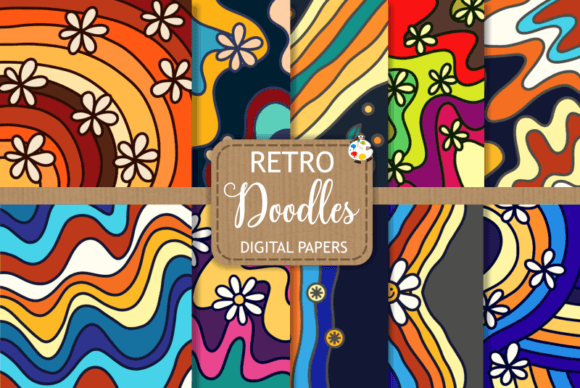
When I sit down to evaluate a new asset for my embroidery workflow, I am rarely looking at just a graphic. I am looking at a translation problem. How does a flat digital image become a tactile, dimensional object that a customer will hold, wear, or display? That is the lens through which I reviewed Retro Doodle Vector Digital Papers. This set of ten unique background designs, characterized by wavy lines and daisy motifs in a distinct retro doodle style, offers a specific aesthetic that can elevate simple handmade goods if handled with care.
As an experienced designer, my first impression of this collection is one of playful nostalgia. The mood is undeniably cheerful, leaning into a mid-century modern sensibility mixed with contemporary hand-drawn whimsy. The visual personality is casual yet structured enough to serve as a background rather than just a focal point. For embroidery designers and small business owners, this distinction is crucial. A design that works well as a digital paper on screen often needs significant adaptation to work effectively as a machine embroidery design. Here, the wavy lines suggest movement, while the daisy flowers provide recognizable anchors for the eye.
Real-World Application: From Screen to Stitch
Let’s imagine a practical scenario. You are preparing inventory for an upcoming craft fair or updating your Etsy shop for the spring season. You have ordered blank organic cotton tote bags and natural linen aprons. You need something that feels personal but isn’t so intricate that it requires hours of hoop changes or complex color stops. This is where Retro Doodle Vector Digital Papers shines.
I envision taking one of these background patterns and using it as a backdrop for a central monogram or a smaller, simpler applique element. The wavy lines create a sense of texture without requiring excessive stitch density. On a canvas tote bag, this combination creates a high-value handmade product that looks professionally designed. The contrast between the smooth fabric and the textured, wavy embroidery adds depth that photographs beautifully for social media marketing. Customers respond well to this kind of layered visual interest because it suggests effort and quality.
Similarly, for baby clothes or nursery decor, the daisy elements provide a soft, gentle theme. When stitched onto a onesie or a quilted blanket, the retro style adds a trendy, vintage flair that appeals to millennial parents who appreciate boutique aesthetics. It transforms a basic personalized gift into a statement piece. However, success here depends entirely on how you digitize the file. The pattern must be treated as a texture, not a dense block of ink.
Performance in Embroidery Situations
The versatility of this design set lies in its adaptability across various custom apparel categories. Whether you are creating sweatshirt embroidery for teens or holiday embroidery gifts, the retro doodle aesthetic bridges the gap between youthful fun and sophisticated minimalism.
For commercial embroidery projects, such as branded merchandise for local businesses, these backgrounds offer a way to add brand identity without overwhelming the logo. Imagine a coffee shop logo centered on a field of subtle, wavy line embroidery. It reinforces brand recognition while adding a tactile experience that printed shirts cannot match. For Etsy sellers and small shop products, this ability to create unique design assets helps differentiate your listings from mass-produced competitors.
The stitch density potential is particularly interesting. Because the original concept is a vector digital paper, the lines are likely continuous and flowing. In an embroidery context, these can be converted into long satin stitches or narrow fill stitches to mimic the look of marker or pen strokes. This technique reduces thread usage and stitching time compared to traditional dense fills, making it more efficient for bulk orders. It also minimizes the risk of fabric puckering, a common issue with heavy embroidery on thin materials.
Where to Use Carefully: Limitations and Risks
No design is universally perfect, and Retro Doodle Vector Digital Papers has specific constraints that every embroiderer must respect. The most critical limitation arises when attempting to use these patterns in very small hoop sizes. The fine details of the wavy lines and individual daisies can become muddy if the resolution is too low or if the stitches are forced too close together. If you try to shrink this design down to fit a standard baseball cap front panel, you may lose the character of the doodle style entirely.
Furthermore, the choice of fabric plays a massive role in the final outcome. Textured fabrics like boucle wool or heavy denim can obscure the delicate lines of the doodle pattern. Thin fabrics, such as lightweight polyester blends used in some athletic wear, require a strong stabilizer to prevent the tension of the wavy lines from distorting the material. Stretchy knits are another challenge; without proper stabilization, the circular motion of the waves can cause the garment to pucker around the edges.
Dark fabrics present a visibility challenge. If the original vector papers use light colors, they may disappear against black or navy fabric unless you use a contrasting underlay or change the thread palette significantly. Always test your thread colors against your base fabric before committing to a full production run. Additionally, avoid placing these designs on curved surfaces like the brim of a hat or the side of a mug, as the distortion will break the integrity of the wavy lines.
Practical Designer Notes for Success
To ensure your finished project meets professional standards, follow these essential steps before launching into production:
- Test on Scrap Fabric: Never assume a digital pattern will translate perfectly. Stitch a sample on the exact fabric you plan to sell. Check how the fabric texture interacts with the thread.
- Review Stitch Density: Ensure the machine embroidery design is not too dense. Lighter stitches allow the fabric to breathe and reduce the risk of damage.
- Confirm Hoop Size: Verify that the final scaled design fits comfortably within your machine’s maximum hoop dimensions, leaving room for handling.
- Inspect Small Details: Zoom in on the daisy centers and wave intersections. Are they legible? Do they require additional satin stitches to define them?
- Check Stabilization: Use the appropriate stabilizer for your fabric type. Cut-away stabilizers are generally safer for stretchy or frequently washed items like tote bag design projects.
- Verify Licensing: Before selling any finished product or digital embroidery file, review the license terms of Retro Doodle Vector Digital Papers. Ensure you have commercial rights for the volume of sales you intend to make.
Final Verdict on Visual Appeal and Value
Ultimately, Retro Doodle Vector Digital Papers adds a layer of sophistication and trend-awareness to your portfolio. It moves beyond generic clipart into the realm of curated design assets. When executed correctly, it enhances the perceived value of your embroidery project, allowing you to charge premium prices for what might otherwise be simple embellishments.
The human touch inherent in the "doodle" style resonates with buyers who are tired of sterile, corporate-looking merchandise. It signals that a real person made this item with care. For creative entrepreneurs and makers, this feeling of authenticity is a powerful sales driver. By treating these vector backgrounds with the technical respect they require—paying attention to stitch types, fabric choices, and detail clarity—you can create embroidered patches, kitchen towels, and pillow covers that stand out in a crowded marketplace.
In conclusion, this set is a valuable tool for any designer looking to inject retro charm into their work. It is not a plug-and-play solution that guarantees success, but rather a high-quality foundation that rewards thoughtful execution. Use it wisely, test thoroughly, and you will find that these wavy lines and daisies can transform ordinary blanks into extraordinary keepsakes.