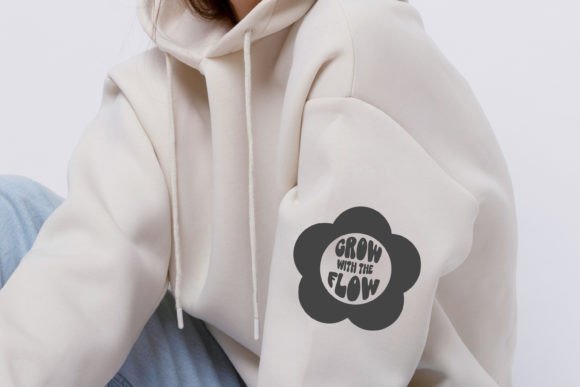
Grow with the Flow Svg: A Designer's Review
When I first opened the file for Grow with the Flow Svg Groovy Retro Boho, my immediate thought wasn't about the technical specifications or the list of compatible software. It was about the vibe. There is a specific energy in retro boho aesthetics that translates surprisingly well into thread, provided you understand how to handle the curves and the personality of the design. As someone who has stitched thousands of designs for client projects and small business merchandise, I don't just look at a file; I visualize the finished product on fabric.
This particular design screams "handmade boutique." It feels like something you would see on a curated Etsy listing for a custom sweatshirt or a set of kitchen towels made by a local artisan. The groovy typography and flowing lines suggest movement, which is exactly what we want in embroidery to avoid a stiff, static look. But does it hold up under the needle? Let's walk through how this design performs in real-world scenarios.
The First Stitch: Visualizing the Outcome
The layout of Grow with the Flow Svg Groovy Retro Boho is designed with a casual, organic rhythm. In the digital realm, those smooth gradients and wavy lines are easy to appreciate. However, when translating this into a machine embroidery design, the challenge lies in converting those fluid shapes into stitches without losing the soul of the artwork. The design naturally belongs in projects where a relaxed, welcoming atmosphere is desired. It fits perfectly on a canvas tote bag, where the texture of the fabric complements the boho theme, or on a soft cotton apron for a home baker.
I imagine this design embroidered in a palette of mustard yellows, burnt oranges, and sage greens. The color potential here is high because the retro style invites warm, earthy tones. If you were creating a personalized gift for a friend who loves yoga or nature, this design would resonate immediately. It doesn't feel corporate or rigid; it feels approachable and creative. That emotional connection is crucial for handmade products, as customers often buy the story behind the item as much as the item itself.
Real-World Application: From File to Finished Product
Let's talk about a specific scenario. Imagine you are an Etsy seller preparing a batch of custom embroidered patches for a new clothing line. You select Grow with the Flow Svg Groovy Retro Boho as the centerpiece. The design's curves allow it to wrap nicely around a circular patch shape, creating a badge-like effect that looks professional yet quirky.
For a commercial embroidery project like decorating hoodies for a local coffee shop, this design adds a layer of brand personality. It suggests a laid-back environment, which is often exactly what modern cafes want to convey. When stitched onto a heavy cotton blend sweatshirt, the fill stitch areas will provide enough density to stand out against the fabric, while the running stitch elements can mimic the hand-drawn quality of the original SVG.
However, not every surface is a winner. While this design excels on flat surfaces like pillow covers and tea towels, it requires careful consideration for curved surfaces like baseball caps. The text needs to be positioned carefully to ensure the curvature of the cap doesn't distort the "flow" of the words. On a cap, the top curve might make the letters look squished if the hoop size isn't adjusted correctly. For these types of items, testing on scrap fabric is non-negotiable.
Navigating Technical Challenges and Fabric Choices
As an experienced designer, I know that a beautiful graphic can fail if the execution is poor. With Grow with the Flow Svg Groovy Retro Boho, there are specific areas where you need to pay attention to stitch density and stabilizer choice. If you attempt to use this on thin, stretchy fabrics like jersey knit without proper stabilization, the distortion from the tension of the stitches could ruin the retro aesthetic. The lines might pull inward, making the design look smaller and tighter than intended.
Textured fabrics present another hurdle. If you are embroidering this onto a bouclé sweater or a rough linen, the fine details of the groovy waves might get lost in the weave of the material. In these cases, a simpler, bolder version of the design might work better, or you might need to increase the stitch count to ensure clarity. Conversely, on a smooth, tightly woven twill for a hat or a tote bag, the design shines. The clean background allows the satin stitch edges to pop, giving the finished product a crisp, high-quality appearance.
One critical factor is the scale of the design. If you are planning to use this for a small item like a baby onesie or a pocket detail, you must verify the dimensions before stitching. Embroidery machines have minimum sizes for certain stitch types, and tiny lettering in a complex script can sometimes result in thread breaks or piling if the design is too small. Always check the recommended hoop size for your specific machine to ensure the design fits comfortably without cutting off any parts of the flow.
Practical Notes for the Embroidery Designer
Before you commit to a full production run for your craft business or a large holiday order, follow these practical steps to ensure success:
- Test on Scrap Fabric: Never skip this step. Run a test stitch on a piece of the same fabric you intend to use to check for puckering and thread tension.
- Check Thread Contrast: Ensure your chosen thread colors offer enough contrast against the fabric. A light thread on a white shirt might disappear, while a dark thread on black fabric could look muddy unless using metallics.
- Inspect Small Details: Zoom in on the digital preview. Are there any tiny corners or sharp turns that might cause the needle to hit the hoop or create weak points in the stitch?
- Review Stabilizer Needs: Heavier designs require heavier stabilizers. For this boho style, a cut-away stabilizer is usually best for durability, especially on garments that will be washed frequently.
- Licensing Verification: If you plan to sell finished items featuring this design, double-check the licensing terms included with the file. Some digital graphics allow personal use only, while others permit commercial sales of physical goods.
Final Thoughts on Value and Professionalism
The true value of a design asset like Grow with the Flow Svg Groovy Retro Boho lies in its versatility and the professionalism it brings to your brand. When a customer receives a product with a well-executed, cohesive design, it builds trust. They perceive the item as higher quality, even if the price point is similar to mass-produced alternatives.
This design is particularly effective for seasonal campaigns, such as holiday gifts or spring collections, where a nostalgic, cheerful mood is appropriate. It bridges the gap between digital print templates and tangible embroidery files, offering a unique aesthetic that stands out in a crowded marketplace. Whether you are a hobbyist making gifts for family or a small shop owner expanding your inventory, this design offers a solid foundation for creating memorable, handmade products.
Ultimately, the success of your embroidery project depends on the synergy between the design and your technique. Grow with the Flow Svg Groovy Retro Boho provides a strong visual framework, but it is your skill in selecting the right fabrics, threads, and stabilizers that will bring it to life. By approaching each project with care and attention to detail, you can transform a simple digital file into a cherished piece of wearable art.